Nightcrow Publishing
The Library
Original gothic fiction. Curated classics. Ancient grimoires. Folklore from the edge of the known world.
Gothic Fiction
Dark Narratives
Original works by C.N. Harrow alongside curated Nightcrow editions of the foundational texts of gothic horror.

The Blackwood Journals · Vol. 1
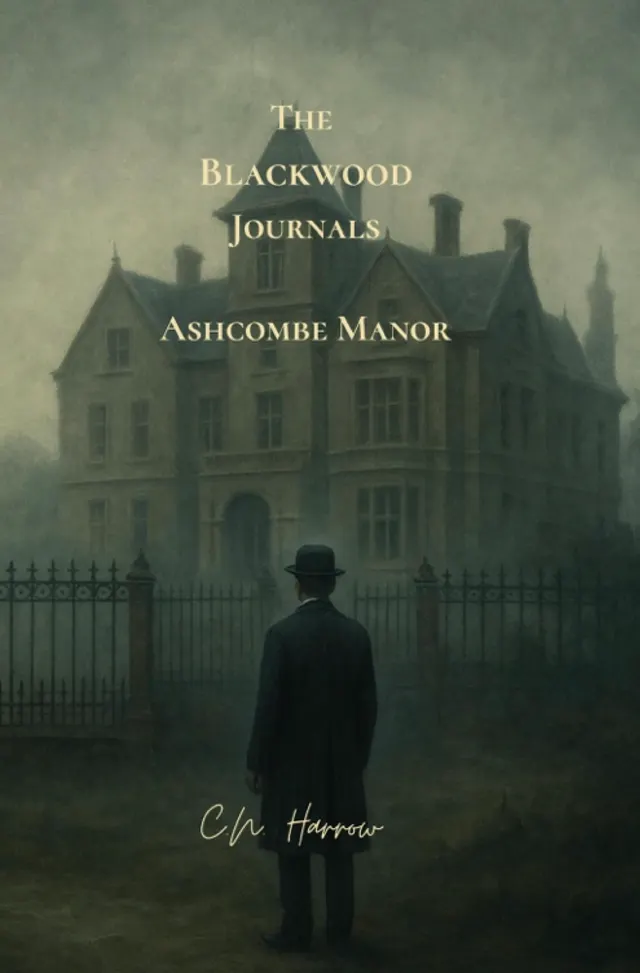
Ashcombe Manor
The mirror should have stayed broken. Dr Jonathan Blackwood arrives to treat a mute boy who writes things no child should know. What he finds is a house where shadows move with intent and an ancient mirror holds something far worse than reflections. To save the boy trapped within the glass, Blackwood must face an entity that has been feeding for centuries.

The Blackwood Journals · Vol. 2
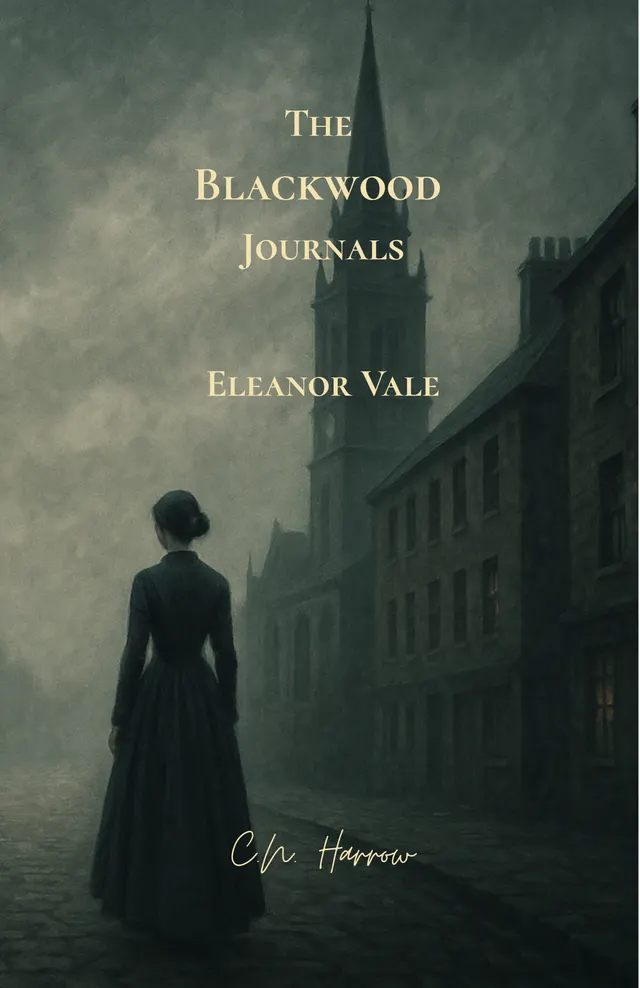
Eleanor Vale
In the shadowed wynds of Victorian Edinburgh, Eleanor Vale arrives searching for her missing sister. Beneath the South Bridge Vaults, something has been waiting. The Book of Worms pulses with terrible knowledge. The Hollow Ones emerge from alcoves that should be empty. And Eleanor's name has appeared on the final page of her sister's journal, in ink that is still moving.

The Blackwood Journals · Vol. 3
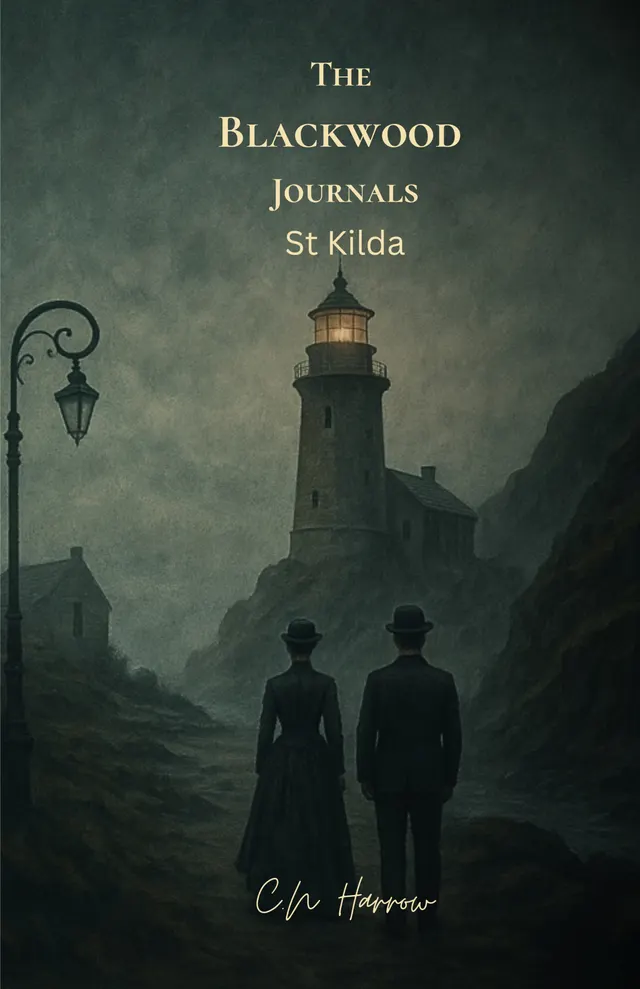
St Kilda
Some islands remember. This one hungers. Blackwood travels to the remote Scottish island of St Kilda, where fog never lifts, mirrors show futures instead of reflections, and villagers carve spirals into their own flesh. Eleanor is forgetting her voice, her memories, and his face. Because the island doesn't just take. It replaces. And it has been preparing a bride.

The Blackwood Journals · Vol. 4
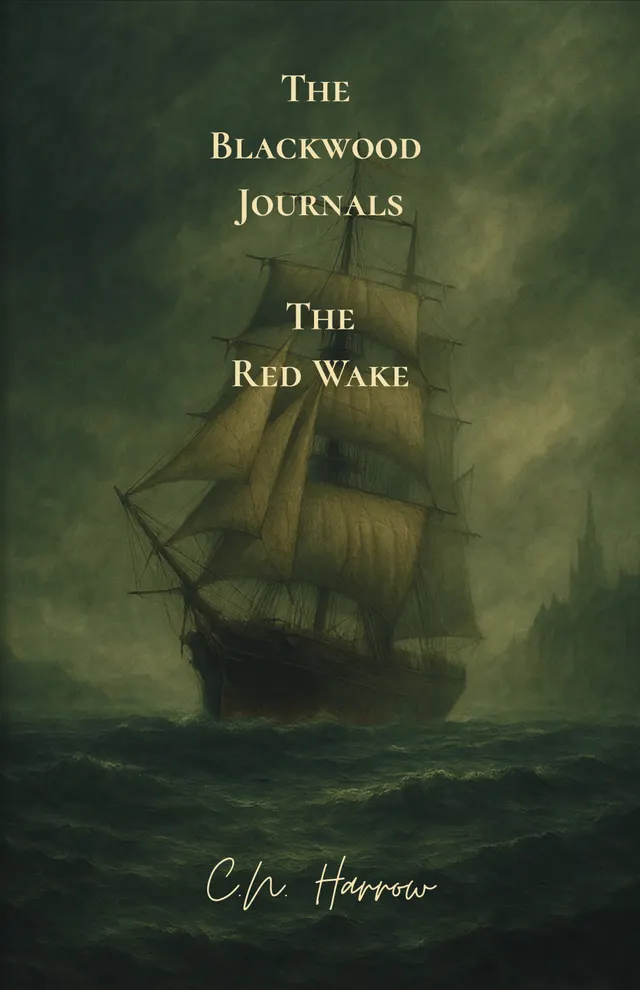
Red Wake
In 1835, the barque Red Wake slips from port into a fog that does not lift. Young Mire finds his name carved into the ship's timber beneath a date yet to come. First Mate Stone watches his logbook rewrite itself, days repeat, and the crew's memories quietly erased. The ship is not merely lost. It is alive. It has purpose.

The Blackwood Journals · Vol. 5
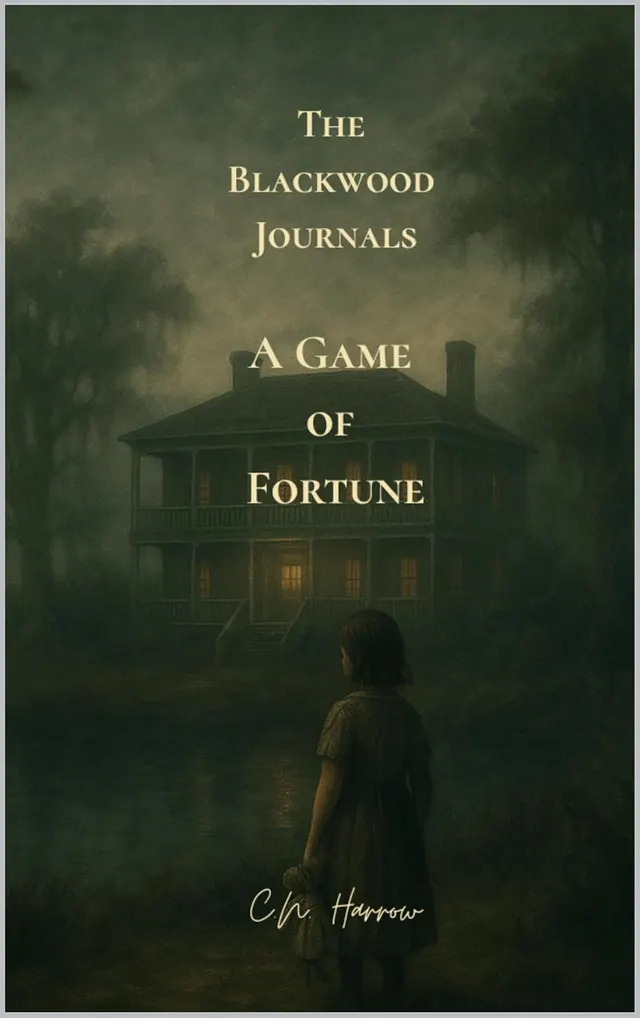
A Game of Fortune
Boston, 1834. Lord William Ashcombe's fortune has collapsed and his only hope lies in a secret gaming room where wagers are whispered in blood. There he encounters a mirror carried from the witch trials of Salem, now awakened and hungry. From Boston's counting houses to the bayous of the American South, Ashcombe learns that every debt demands payment, and some accounts are written in flesh.

The Blackwood Journals · Vol. 6
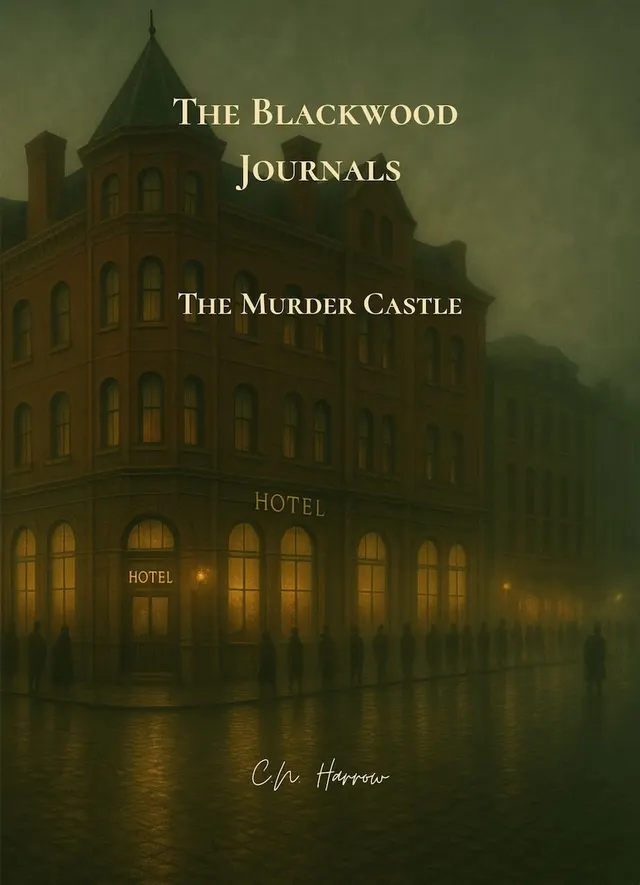
Murder Castle
Dr Edward Harrow and his wife Audrey check into the Columbian Hotel during Chicago's World's Fair of 1893. He brings his journals, his methodology, his absolute faith that to document precisely is to protect. He is wrong. What Holmes has built at Sixty-third Street is not a hotel. It is a laboratory. And the physician who published the definitive paper on prolonged anaesthetic exposure has just become its most carefully selected subject.

Standalone Novel
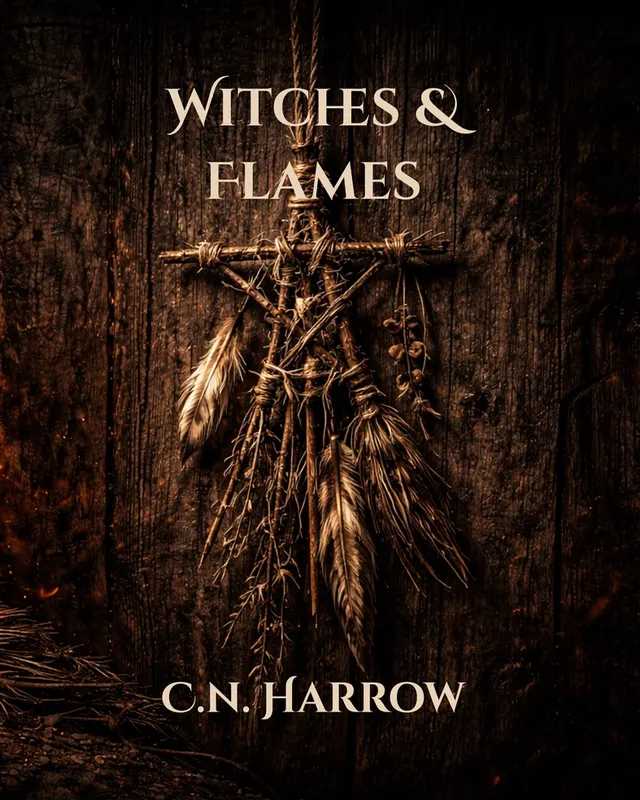
Witches & Flames
Mercy was Maren Thornwood's crime. In the shadow of the 1692 Appalachian Mountains, a young witch saves the life of an injured hunter and seals both their fates. Captain O'Malley has been watching. The execution ground is ready. The ritual he has planned will not end the war — it will awaken something far worse. A Gothic historical epic where love is treason, mercy is betrayal, and ancient evil wears the mask of righteousness.
Nightcrow Classics
The Castle of Otranto
The grandfather of Gothic fiction. Walpole's fever dream of a novel — written in a single sitting after a nightmare — invented every convention the genre would spend two centuries exploring.
Nightcrow Classics
Vathek
An Arabian Gothic of extraordinary strangeness — a Caliph consumed by obsession who sells his soul to the underworld. Decadent, dark, and unlike anything else in the canon.
Nightcrow Classics
The Mysteries of Udolpho
The definitive Radcliffean Gothic — every apparent supernatural terror given a rational explanation at the end, set against towering Italian castles and the sublime landscape.
Nightcrow Classics
The Monk
Scandalous on publication and still startling today. Black magic, demonic compacts, and Gothic violence in a Spanish monastery. Lewis wrote this aged nineteen.
Nightcrow Classics
Melmoth the Wanderer
A scholar sells his soul for extra centuries of life and wanders eternity seeking someone to take his damnation. One of the strangest and most ambitious Gothic novels ever written.

Nightcrow Classics
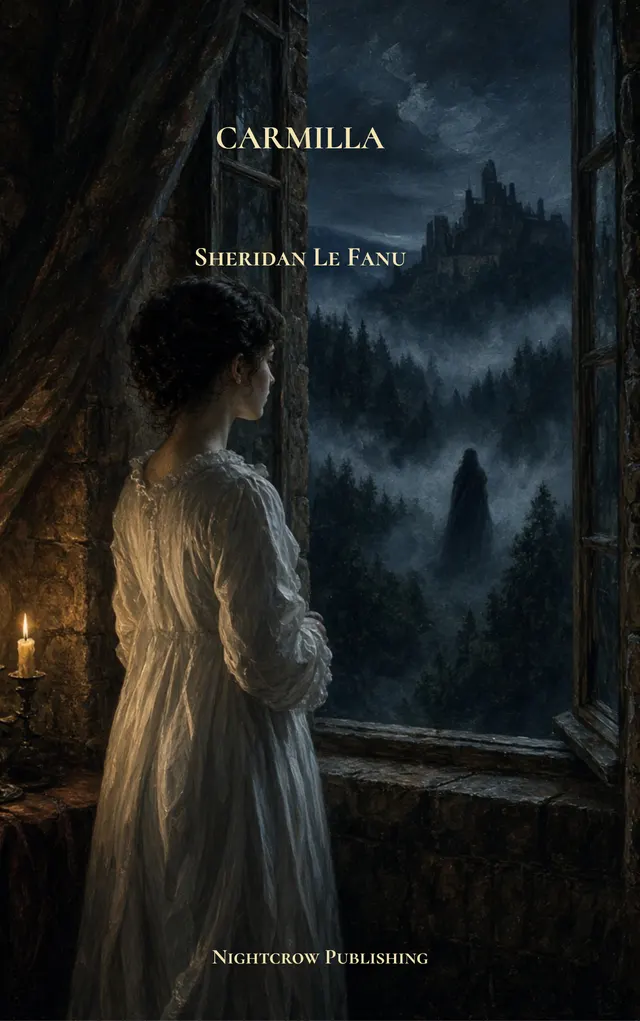
Carmilla
The original vampire novella. Predating Dracula by twenty-five years, Le Fanu's masterpiece remains the more unsettling work — intimate, psychological, and deeply strange.
Nightcrow Classics
Frankenstein
Not a monster story. A philosophical reckoning with creation, abandonment, and the cost of ambition. The 1818 text — darker and more uncompromising than the revised edition.
Nightcrow Classics
Dracula
The definitive vampire novel. Stoker's epistolary masterpiece — journals, letters, and telegrams assembling a portrait of creeping, inexorable dread.
Nightcrow Classics
Dr Jekyll and Mr Hyde
The divided self made flesh. Stevenson's novella about the darkness every respectable Victorian gentleman kept carefully locked away beneath the city fog.
Nightcrow Classics
The Picture of Dorian Gray
Vanity, corruption, and a portrait that absorbs every sin its subject commits. Wilde's only novel is Gothic horror dressed as society comedy.
Nightcrow Classics
The Turn of the Screw
Are the ghosts real, or is the governess losing her mind? Henry James offers no resolution. The ambiguity is the horror — and it never resolves.
Nightcrow Classics
Tales of Mystery and Imagination
The complete short fiction of Edgar Allan Poe. The foundation of psychological horror — atmosphere as architecture, dread as philosophy, every word load-bearing.
Nightcrow Classics
The King in Yellow
A cursed play that drives anyone who reads it to madness. Chambers's collection of weird fiction is one of the strangest and most influential books of the 1890s.
Nightcrow Classics
The Lair of the White Worm
Stoker's strange late novel — ancient sea creatures, regional folk horror, and a deeply unsettling atmosphere that his more famous work never quite matched.
Nightcrow Classics
In a Glass Darkly
The collection that contains Carmilla — five stories of psychological and supernatural dread. Green Tea alone, about a man haunted by a spectral monkey only he can see, is worth the volume.
Nightcrow Classics
Uncle Silas
Le Fanu's masterful Gothic novel. A young woman trapped in a crumbling mansion with a guardian who may be plotting her murder. Slow-burning, claustrophobic, and genuinely frightening.
Nightcrow Classics
The Purcell Papers
Le Fanu's early Irish ghost stories — raw, strange, and rooted in a landscape that feels ancient and genuinely threatening. A different and darker Le Fanu than the later work.
Penny Dreadfuls
Victorian Sensation Fiction
Written for the working classes of Victorian Britain, published weekly for a penny, and more genuinely dark than anything the respectable literary establishment was willing to produce. The penny dreadful tradition invented Sweeney Todd, gave the world its first vampire novel, and has never been given its proper due.
Nightcrow Penny Dreadfuls
The String of Pearls
The original Sweeney Todd — not the musical, not the film, but the 1850 expanded penny dreadful that spawned them all. The Demon Barber of Fleet Street murders his customers and passes their remains to Mrs Lovett's pie shop. Darker, stranger, and more politically savage than any adaptation has dared to be. In this expanded edition, Todd survives his sentence and disappears into the city. London has not seen the last of him.
Nightcrow Penny Dreadfuls
Varney the Vampire
The vampire novel that preceded Dracula by fifty years — and has never received the recognition it deserves. Sir Francis Varney is not the confident predator Stoker later created. He is ancient, tormented, and genuinely pitiable — a creature who hates what he is and cannot stop being it. Eight hundred pages of Victorian gothic excess, written in weekly instalments for a working-class readership that demanded more blood, more dread, and more impossible escapes.
Dark Curiosities
Strange Worlds
Works that do not fit neatly into gothic horror but belong in the Nightcrow library regardless — strange, precise, and darker beneath the surface than popular memory allows.
Nightcrow Curiosities
Alice's Adventures in Wonderland
Not the whimsy. Not the Disney version. The original Alice — a child navigating a world that operates on dream logic that is internally consistent and entirely alien. Carroll was a mathematician and logician, and the nonsense is structured nonsense, governed by rules that almost make sense and then do not. The horror is a world that has its own perfect logic and that logic is not yours.
Nightcrow Curiosities
Through the Looking-Glass
The darker sequel. Alice steps through the mirror into a world running backwards, where time moves in the wrong direction and memory works in reverse. The chess game that structures the narrative gives everything the quality of predetermination — every move already made, every outcome already decided. Carroll's mathematics made strange and genuinely unsettling.
The Northanger Novels
As Recommended by Jane Austen
In Northanger Abbey, Isabella Thorpe presses seven Gothic novels upon Catherine Morland as the most deliciously horrid reading available. Once believed to be titles Austen invented — every one of them is real. Nightcrow is publishing all seven.
The Northanger Novels
Castle of Wolfenbach
One of the seven Gothic novels Isabella Thorpe presses upon Catherine Morland in Northanger Abbey — once thought to be titles Austen invented. They are all real.
The Northanger Novels
The Mysterious Warning
Parsons's second entry in Austen's infamous list. A Gothic tale of dark family secrets, mysterious voices, and the dread that accumulates in old houses.
The Northanger Novels
Clermont
Regina Maria Roche's contribution to the Northanger list — ruined castles, concealed identities, and the full machinery of late eighteenth-century Gothic terror.
The Northanger Novels
The Necromancer
A Gothic tale set in the Black Forest — one of the darkest and most atmospherically dense of the seven Northanger novels, with genuine occult menace.
The Northanger Novels
The Midnight Bell
Francis Lathom's entry in Austen's horrid list. Secret passages, a tolling midnight bell, and the full complement of Gothic dread.
The Northanger Novels
The Orphan of the Rhine
Eleanor Sleath's Rhine-set Gothic — unknown parentage, ruined abbeys, and the inexorable working of ancestral guilt across generations.
The Northanger Novels
Horrid Mysteries
Carl Grosse's labyrinthine Gothic — secret societies, mysterious persecutions, and a conspiracy that spans borders. The most politically charged of the seven.
Grimoires
The Forbidden Library
Historical occult texts — conjuration manuals, demonic catalogues, and systems of ceremonial magic. Curated and introduced by Nightcrow Publishing.
Nightcrow Grimoires
The Lesser Key of Solomon
The Goetia — seventy-two demons, their seals, their offices, and the rites required to compel them. The most influential grimoire in the Western tradition.
Nightcrow Grimoires
The Red Dragon
Le Dragon Rouge — one of the most notorious French grimoires, containing the conjuration of Lucifer himself. Transgressive and genuinely strange.
Nightcrow Grimoires
The Grimoire of Pope Honorius
Papal authority bent toward demonic conjuration. One of the most controversial texts in occult history — and one of the most fascinatingly transgressive.
Nightcrow Grimoires
The Grand Grimoire
Also called The Red Dragon's companion — a notorious French black magic text containing one of the most complete systems of demonic pact-making ever written.
Nightcrow Grimoires
The Sixth and Seventh Books of Moses
Enormously influential across folk magic traditions worldwide. A blend of Kabbalistic seals, conjurations, and practical magic that shaped Hoodoo and Pennsylvania Dutch tradition alike.
Nightcrow Grimoires
The Magus
Francis Barrett's 1801 comprehensive English compendium of ceremonial magic — drawing on Agrippa, the grimoire tradition, and Barrett's own occult practice.
Nightcrow Grimoires
Three Books of Occult Philosophy
The most scholarly and comprehensive magical text of the Renaissance. Agrippa synthesised the entire Western occult tradition into a single monumental work.
Nightcrow Grimoires
The Book of Abramelin
A lengthy and demanding system of angelic magic requiring eighteen months of ritual preparation. One of the most serious and architecturally complex grimoires ever written.
Nightcrow Grimoires
The Arbatel of Magic
Renaissance spirit conjuration with a philosophical dimension rarely found in grimoire literature. Unusually thoughtful about the ethics of magical practice.
Nightcrow Grimoires
The Black Pullet
An 18th century French grimoire of talismans and magic rings, set against an orientalist Egyptian backdrop. Eccentric, elaborate, and entirely compelling.
Nightcrow Grimoires
The Picatrix
The great medieval Arabic grimoire of astrological magic — translated into Latin in 1256 and kept secret for centuries. One of the most complex magical texts ever compiled.
Nightcrow Grimoires
Pseudomonarchia Daemonum
Johann Weyer's 1577 catalogue of demons — predating the Goetia and offering a different, often more ambiguous account of the infernal hierarchy.
Folklore & Tales
From the Old World
Ghost stories, supernatural fiction, and the folkloric collections that mapped the fears of a vanishing world.
Nightcrow Folklore
Ghost Stories of an Antiquary
The gold standard of English ghost fiction. M.R. James invented the modern ghost story here — scholarly, restrained, and genuinely terrifying in its understatement.
Nightcrow Folklore
More Ghost Stories
The follow-up collection — James at the height of his powers. Ruins, manuscripts, and things glimpsed at the edge of vision that should not be there.
Nightcrow Folklore
The Willows
Arguably the finest weird fiction story in the English language. Two men on a canoe journey encounter something ancient and entirely indifferent to human existence.
Nightcrow Folklore
The Wendigo
Blackwood's masterful treatment of the Algonquian folklore creature — vast, wind-borne, and utterly inhuman. The wilderness as incomprehensible threat.
Nightcrow Folklore
John Silence
Blackwood's occult detective — a physician of the soul who investigates cases beyond conventional medicine. Atmospheric, serious, and rooted in genuine folkloric tradition.
Nightcrow Folklore
The Great God Pan
Arthur Machen's most visceral and disturbing work. A scientific experiment tears the veil between worlds — and what comes through should not have been permitted.
Nightcrow Folklore
The Hill of Dreams
Machen's most personal and dreamlike work. A young writer retreats into an increasingly hallucinatory inner world — beautiful, melancholy, and deeply strange.
Nightcrow Folklore
The House on the Borderland
William Hope Hodgson's cosmic horror novel — a recluse in a remote Irish house experiences visions of time, space, and the eventual death of the sun. Genuinely frightening.
Nightcrow Folklore
Carnacki the Ghost Finder
Hodgson's occult detective investigates hauntings with a combination of folklore knowledge, electrical apparatus, and genuine courage. The best occult detective fiction of the Edwardian era.
Nightcrow Folklore
The Golden Bough
Frazer's foundational study of comparative mythology, magic, and religion. The book that revealed the folkloric substructure beneath every culture's sacred stories.
Nightcrow Folklore
British Goblins
Wirt Sikes's 1880 comprehensive study of Welsh folklore — the fairy folk, the phantom hounds, the drowned villages, and the ancient dread embedded in the landscape.
Nightcrow Folklore
Celtic Fairy Tales
Joseph Jacobs's 1892 collection of Celtic folklore — stories that predate Christianity, carrying older fears and stranger logics than the sanitised fairy tales that followed.
Nightcrow Folklore
Demonology and Devil-Lore
Moncure Daniel Conway's vast 1879 comparative study of devil mythology, demonic spirits, and folk belief across every major world culture. Scholarly, readable, and endlessly strange.
Sherlock Holmes
The Complete Cases
Arthur Conan Doyle's complete Holmes canon — the detective as a force of pure reason applied to the darkness beneath respectable Victorian life. Every collection, curated and introduced by Nightcrow Publishing.
Nightcrow Classics
The Adventures of Sherlock Holmes
The twelve stories that made Holmes immortal — A Scandal in Bohemia, The Red-Headed League, The Speckled Band. The detective as a force of pure reason applied to the irrational darkness beneath respectable Victorian life.
Nightcrow Classics
The Memoirs of Sherlock Holmes
The second collection — including The Final Problem, in which Conan Doyle attempts to kill his own creation at the Reichenbach Falls and fails to convince anyone it took.
Nightcrow Classics
The Hound of the Baskervilles
The finest long-form Holmes adventure. A spectral hound stalking a cursed family across Dartmoor — gothic horror in the rational detective tradition. The supernatural explanation is a comfort. The real answer is so much worse.
Nightcrow Classics
The Return of Sherlock Holmes
Holmes returns from the dead and Conan Doyle resigns himself to the fact that some characters cannot be killed. Thirteen stories of the detective at the height of his powers.
Nightcrow Classics
His Last Bow
Holmes in the twilight of his career — keeping bees in Sussex, drawn back into the world one last time. The elegiac final collection, shot through with a melancholy Conan Doyle never quite intended.
H.G. Wells
Scientific Romances
Wells imagined the future and found it monstrous. Time machines, invisible men, islands of vivisection, Martian invasion — scientific romance as a vehicle for the darkest possible social commentary.
Nightcrow Classics
The Time Machine
The novel that invented time travel as a literary device — and used it to deliver one of the bleakest visions of human destiny ever published. The Eloi and the Morlocks are not a fantasy. They are a class system taken to its logical conclusion.
Nightcrow Classics
The Island of Doctor Moreau
A shipwrecked man washes ashore on a remote island where a disgraced scientist is remaking animals into men. A closed community with its own laws, its own rituals, its own logic — and a god who has grown tired of his creation. This is gothic horror with a scalpel.
Nightcrow Classics
The Invisible Man
A scientist renders himself invisible and discovers that invisibility is not freedom — it is madness. Wells understood that to be unseen is to be unmoored from the social contract entirely, and what comes next is not liberation but violence.
Nightcrow Classics
The War of the Worlds
Martians invade Surrey. The British Empire encounters something that treats it exactly as it has treated everyone else. Wells wrote this as satire. It has never stopped being terrifying.
Nightcrow Classics
The War in the Air
Wells imagined aerial warfare in 1908 and got most of it right. A prophetic novel about the collapse of civilisation from above — bleaker than anything else he wrote and far less celebrated than it deserves.
Jules Verne
Extraordinary Voyages
Verne sent his characters into the earth, under the sea, and around the world — and found that the further from civilisation they travelled, the stranger and more dangerous the territory became.
Nightcrow Classics
Twenty Thousand Leagues Under the Sea
Captain Nemo and the Nautilus — the greatest submarine in fiction, piloted by the most compelling misanthrope in Victorian literature. An adventure novel with a gothic heart and a protagonist who has deliberately placed himself beyond the reach of the world above.
Nightcrow Classics
The Mysterious Island
Castaways on an uncharted island discover it has a secret keeper — and that their survival has been engineered by a hidden intelligence. Verne's most architecturally complex novel, and the one that most clearly anticipates the closed-island thriller.
Nightcrow Classics
Journey to the Centre of the Earth
A descent into the earth that finds a world that should not exist — ancient seas, prehistoric creatures, vast underground skies. Verne understood that the most unsettling direction is not outward but inward and down.
Nightcrow Classics
Around the World in Eighty Days
Phileas Fogg bets his fortune that he can circumnavigate the globe in eighty days. The novel that made the world feel simultaneously larger and smaller — and introduced one of literature's great unreadable enigmas as a protagonist.
Literary Classics
The Canon, Reconsidered
Works that belong in the Nightcrow library not because they are horror, but because they share its preoccupations — wit as survival, social systems as prisons, and the darkness that polite society works hardest to ignore.
Nightcrow Classics
Pride and Prejudice
The novel that exists in the same world as Northanger Abbey — Austen's rational masterpiece, the counterweight to gothic excess, and the book that proves wit is the sharpest instrument available to anyone navigating a social system designed to contain them. A Nightcrow edition with a foreword on Austen's relationship with the gothic tradition.